BUILT IN THE OPEN · THE SYSTEM GROWS EVERY WEEK · READ THE BUILD LOG
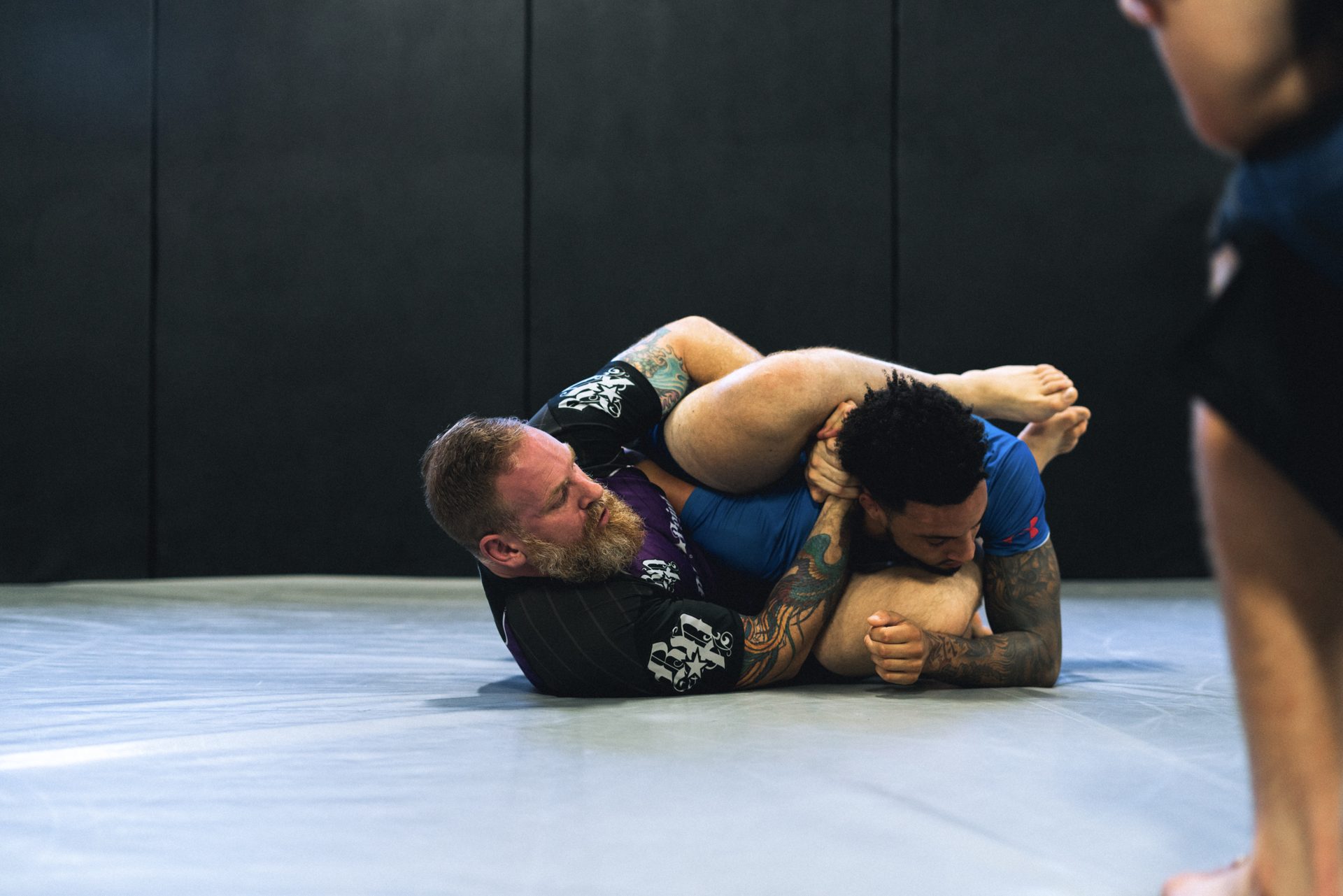
A standing exchange mid-snap-down on the TRITAC mat, class training behind
TRITAC / FEATURES / FLOWS & GAMES
FLOWS · THE BUILDER · THE 3D PLAYER

Sequences,
not trivia.

A flow is a two-person exchange with defined roles. One side attacks in a structured chain. The other defends and earns the counter. The hub holds 245 of them, and a 3D player that renders both fighters.

No credit card. No contract.
hub · flow player
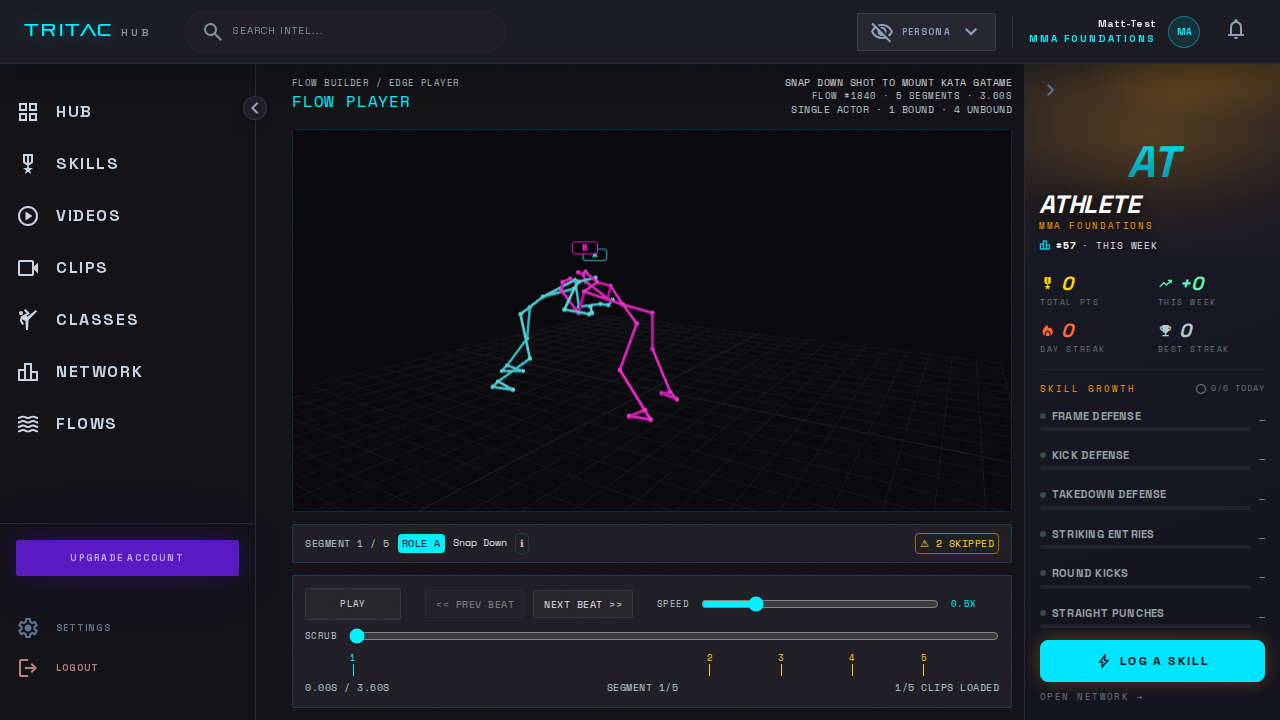
The 3D flow player rendering flow 1840, Snap Down Shot to Mount Kata Gatame, as two skeletal fighters with beats and speed control
FLOW #1840 · SNAP DOWN SHOT TO MOUNT KATA GATAME · LIVE PLAYER

WHY SEQUENCES

Fights happen in chains.

A technique on its own is an answer to a question no one asked. In a live exchange, the jab exists to set something up. The sprawl exists because the shot came. Each move is one beat in a chain.

Most online instruction ignores this. You learn moves in isolation, and isolation is exactly how they fail you live. TRITAC packages the chains themselves. That package is called a flow, and it is how Matt has coached exchanges on the mat for years.

The offense side of a flow is exact: step by step, in order. The defense side stays flexible, because real defense is reading and choosing, not reciting. That balance is deliberate. Train both seats and you stop collecting techniques and start reading exchanges.

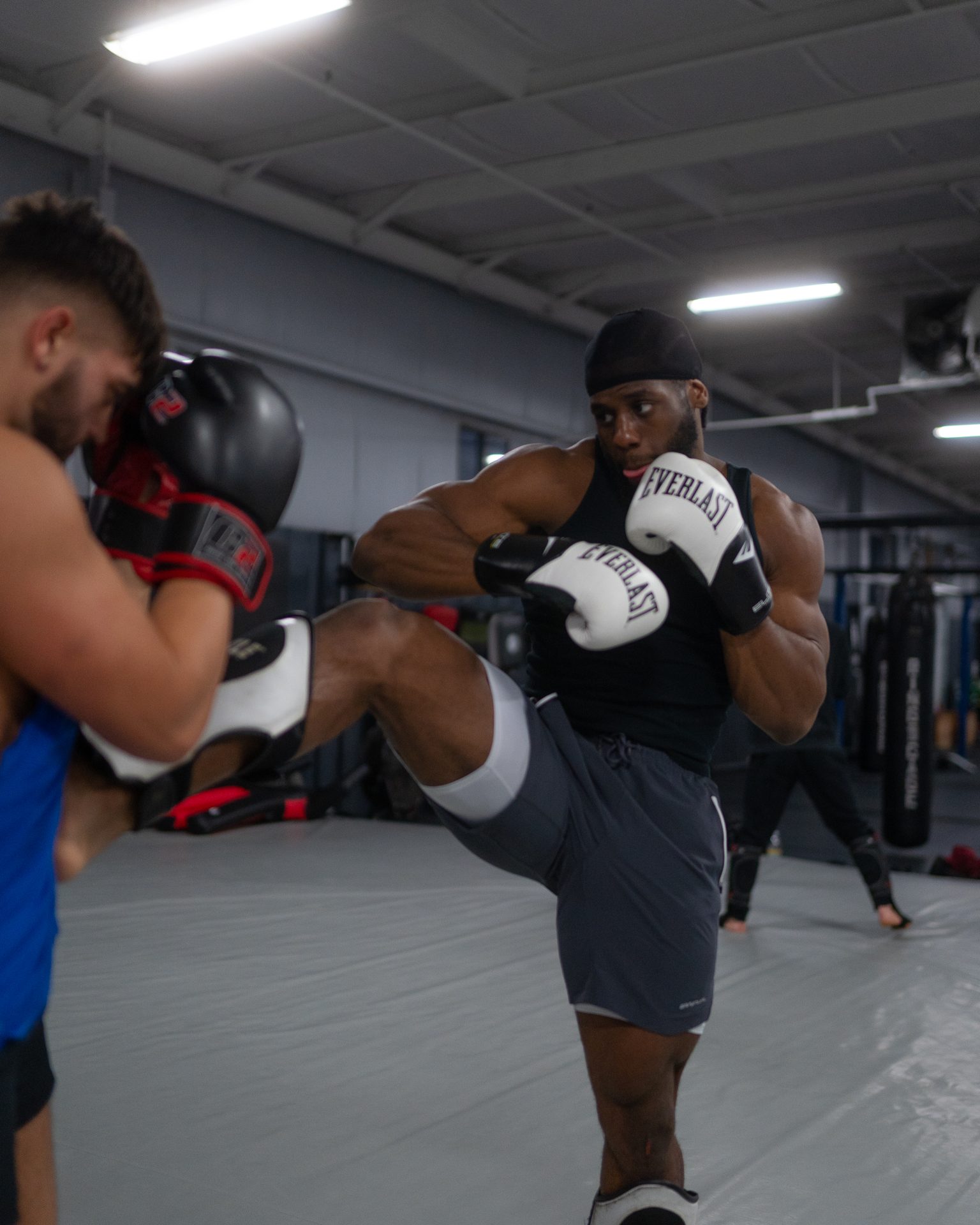
A smiling member gloving up at the cage before a round
EVERY EXCHANGE IS A CHAIN · TRAIN IT THAT WAY
THE 3D PLAYER

Watch both fighters.
At any speed.

Video shows you one camera's opinion of a sequence. The 3D player shows you the sequence itself. Both fighters render as motion data on an open floor. Orbit the camera anywhere. Drop the speed to half. Step through beat by beat with the segment strip.

The capture above is the real player running flow #1840, Snap Down Shot to Mount Kata Gatame. Five segments take a standing snap down through to a finishing position on the ground. Each segment names its role, so you know which seat you are studying.

This matters most for solo study. With no partner in front of you, the player shows the exchange from your opponent's side, at a pace your eyes can use. Watch it slow, shadow it, log the reps.

Real flow names from the live system: Slip and Rip vs Jab-Cross. Punches to Clinch Knee. Jab to Outside Leg Kick. Two-beat striking exchanges up to full chains that start with a punch and end on the ground.

245Flows live in the hub
2Fighters rendered, both roles
5Segments in the flow shown above
0.5xOr any speed your eyes need
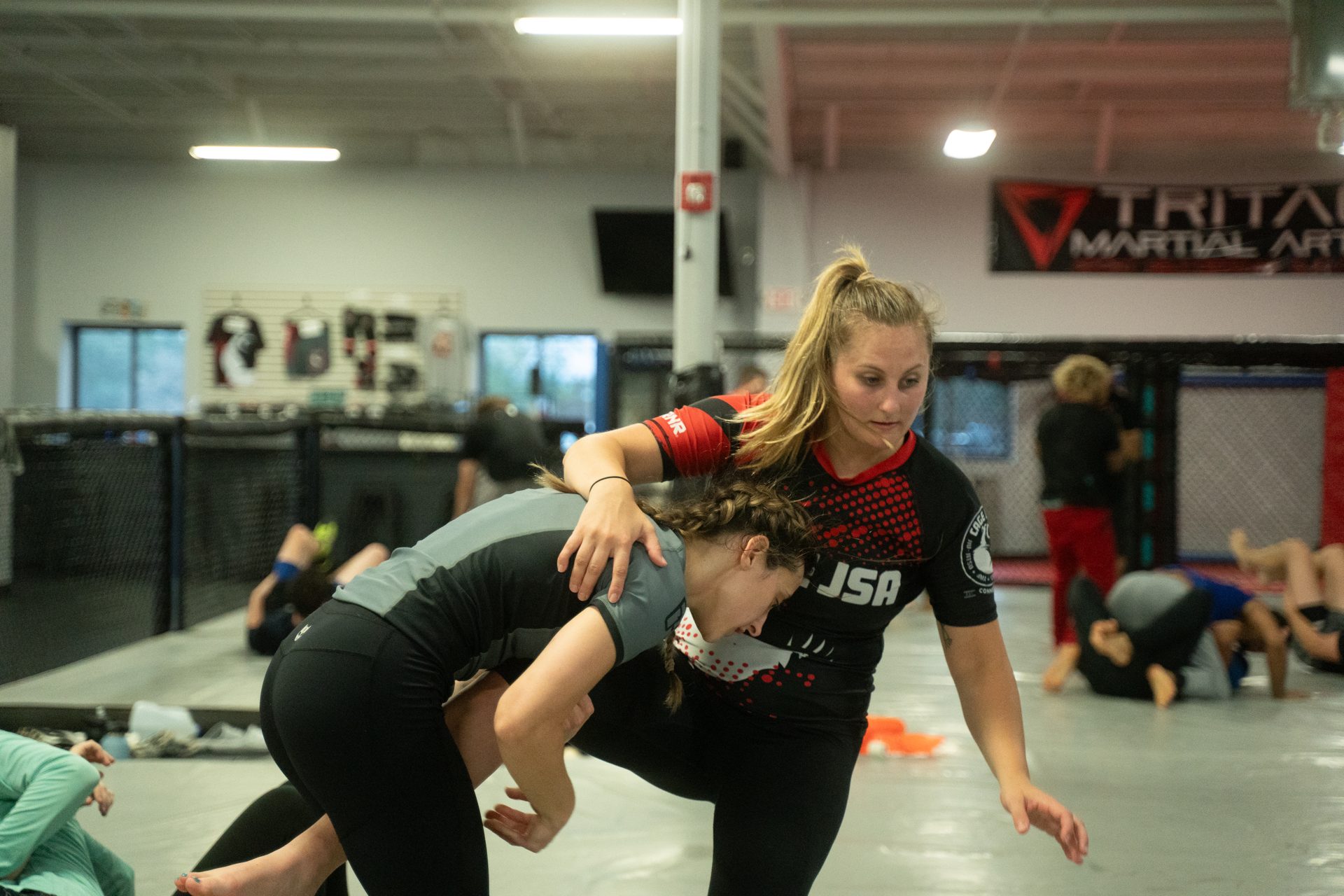
A live ground exchange: one grappler attacking from bottom while a partner defends
WHERE CHAINS END UP · THE GROUND SEATS OF A FLOW
THE BUILDER

Build your own.

Flows are not a fixed library. They are built from the skill map, and the builder ships with the hub. It is the same tool our coaches use.

Pick a starting point. The map shows what connects from there, because every technique carries its verified links. Chain the beats you want to drill, and the sequence is yours: named, saved, and ready to train. A coach who spots a hole in your game can hand you a flow aimed at exactly that hole.

The chains are real, not theoretical. Frame 4 crashes into the Underhook Frame Clinch. Knee Shield Half Guard alone fans into three flows: underhook to standup, side clinch to dog fight, leg entry to deep half guard.

This is what a connected curriculum buys you. The 245 flows in the hub were built from the same map you study, and the map keeps growing. When new connections pass review, new chains become possible.

GAMES

Pressure-test it live.

A flow teaches the sequence. A game finds out if you own it. Games run on the same map: each one takes a slice of the Spine, our connected map of every technique, and adds rules and roles. One partner hunts the snap down. The other defends and scores by earning counters. Drilling becomes live problem-solving with a whistle.

Games are how you close the gap between drilling and sparring without getting hurt closing it. The intensity is adjustable, the goal is narrow, and both partners know their job. It is the step most training skips, and it is the step that makes the sequence yours.

Flows and games are tagged to the skills inside them. Log the work and those skills move on your map, the same as any other training.

OFFENSE

Chains, exact and in order

DEFENSE

Reads and chooses, live

COUNTERS

Earned by the defense, then trained

ONE MAP

Underneath all of it

A striker checking a rising knee mid-exchange in the gym
THE POINT
The chain is what
you have to train.
STRAIGHT ANSWERS

Flow questions.

Do I need a partner to train flows?
No. Every flow has a solo version: shadow the offense line, then the defense line, with the 3D player as your reference for both bodies. A partner upgrades it to drilled work, which moves your map more. The plan tells you which version fits the day you have.
Can members build their own flows?
Yes. The builder in the hub is the same tool our coaches use. It reads the live map, shows you what connects from any starting point, and saves what you chain. Members use it to turn a hole in their game into a drill for fixing it.
I only train grappling. Are striking flows forced on me?
No. Your focus decides what material your plan draws from, and a grappling focus draws grappling flows. Flows that cross ranges, striking into clinch into ground, exist for the people whose goals need them. Yours are built from the areas you chose.
How is this different from an instructional's chapter order?
A chapter order is one teacher's fixed route, filmed once. Flows are generated from a live map of verified connections, so they can start where you are and aim at what you need. When the map grows, the possible chains grow with it.
NEXT ON THE PLATFORM
Video Center & Clips
SEE THE STUDY TOOLS →
TRAIN THE CHAIN

Your first flows
are waiting.

The quiz takes about 2 minutes. The plan it builds is yours free for 21 days.

No credit card. No contract.