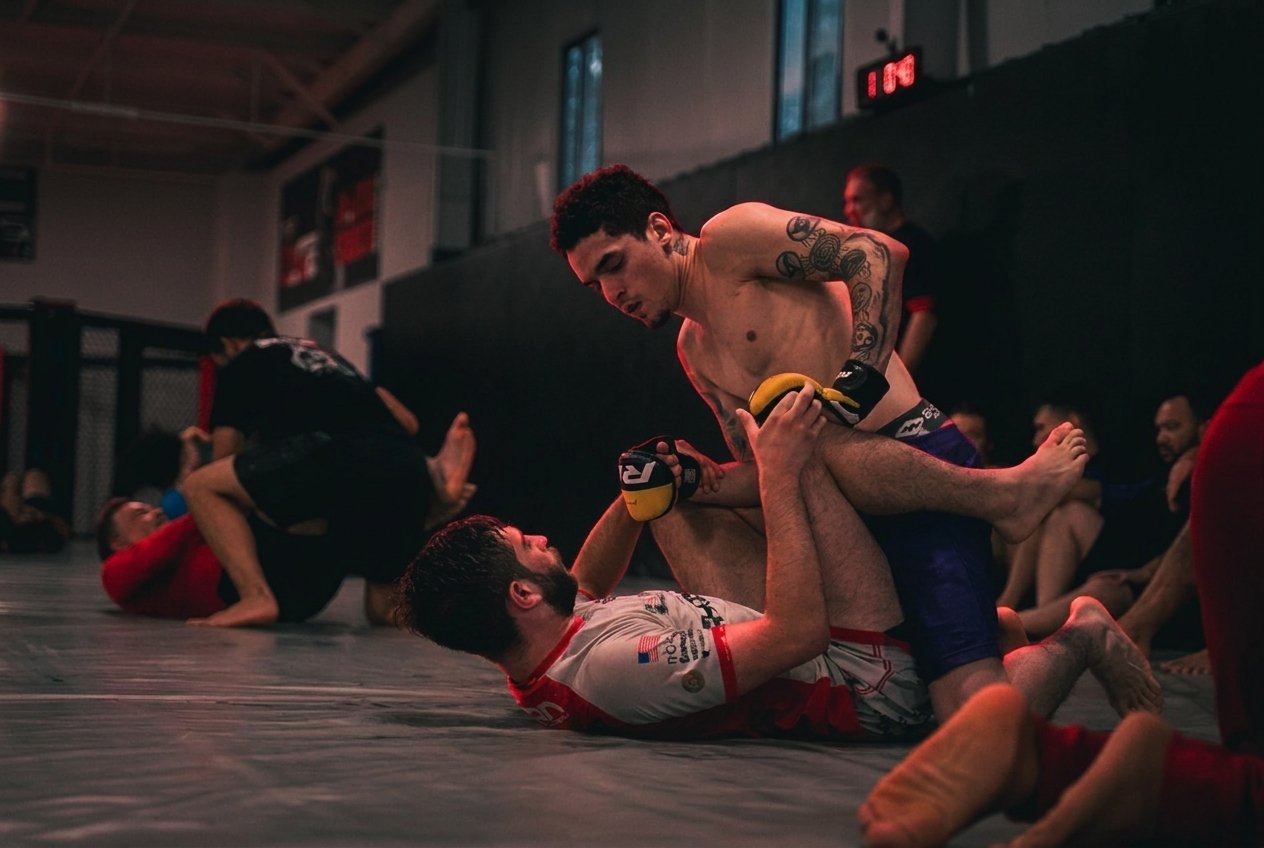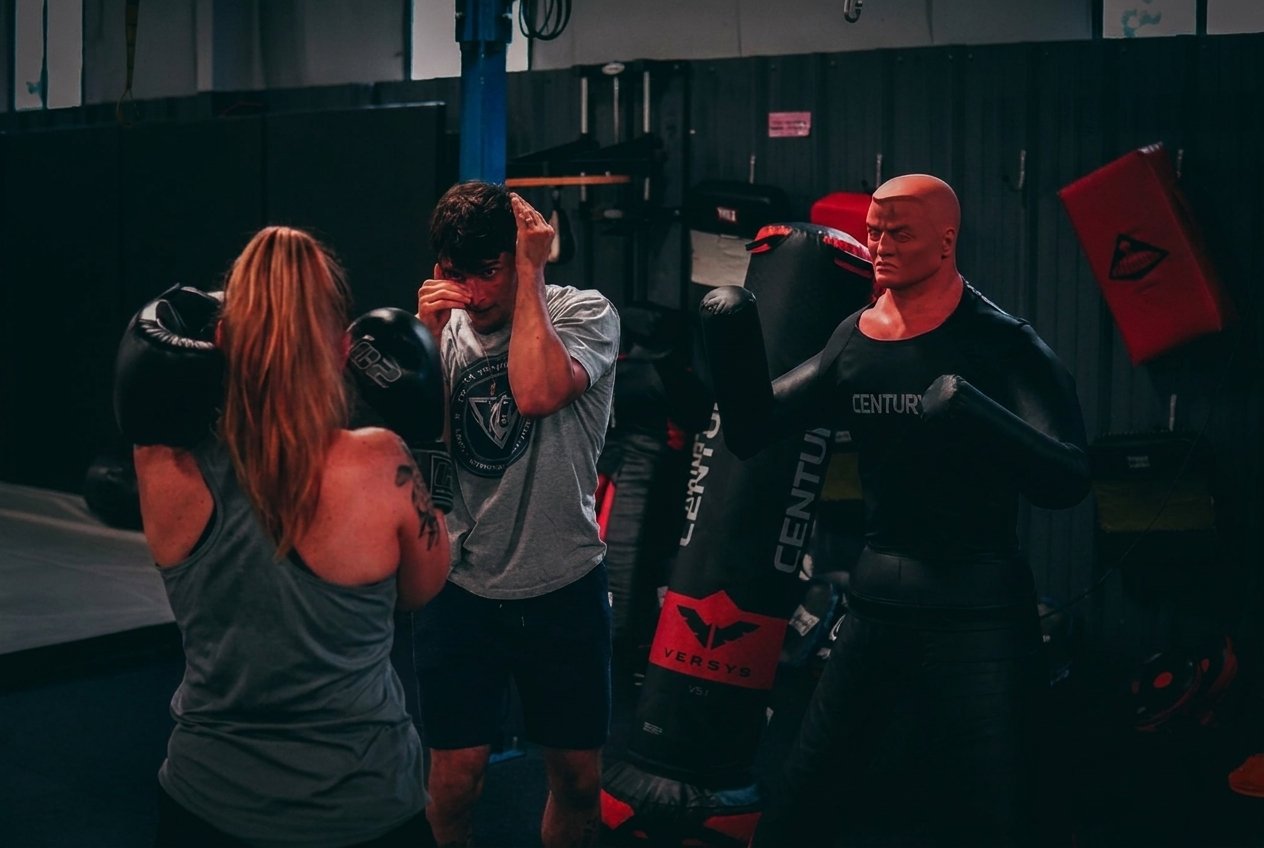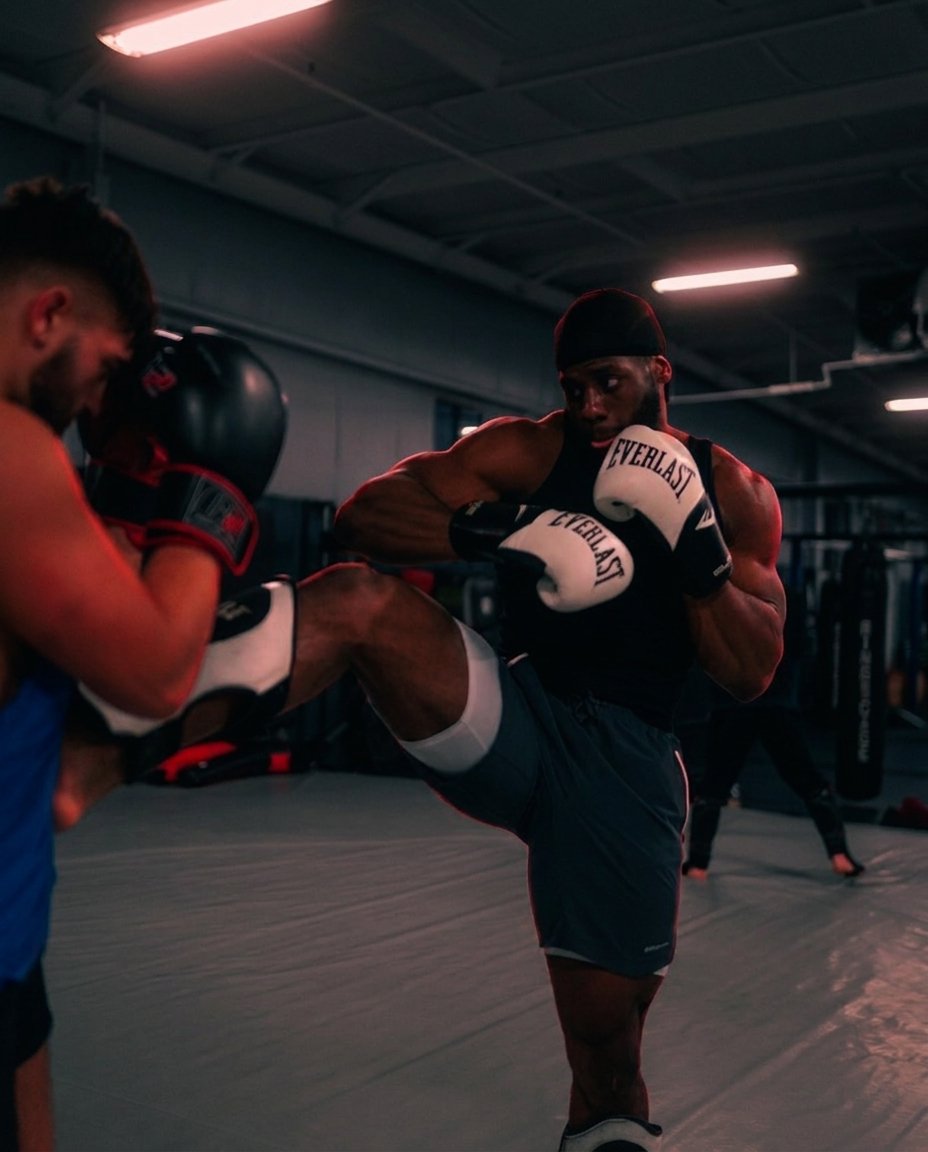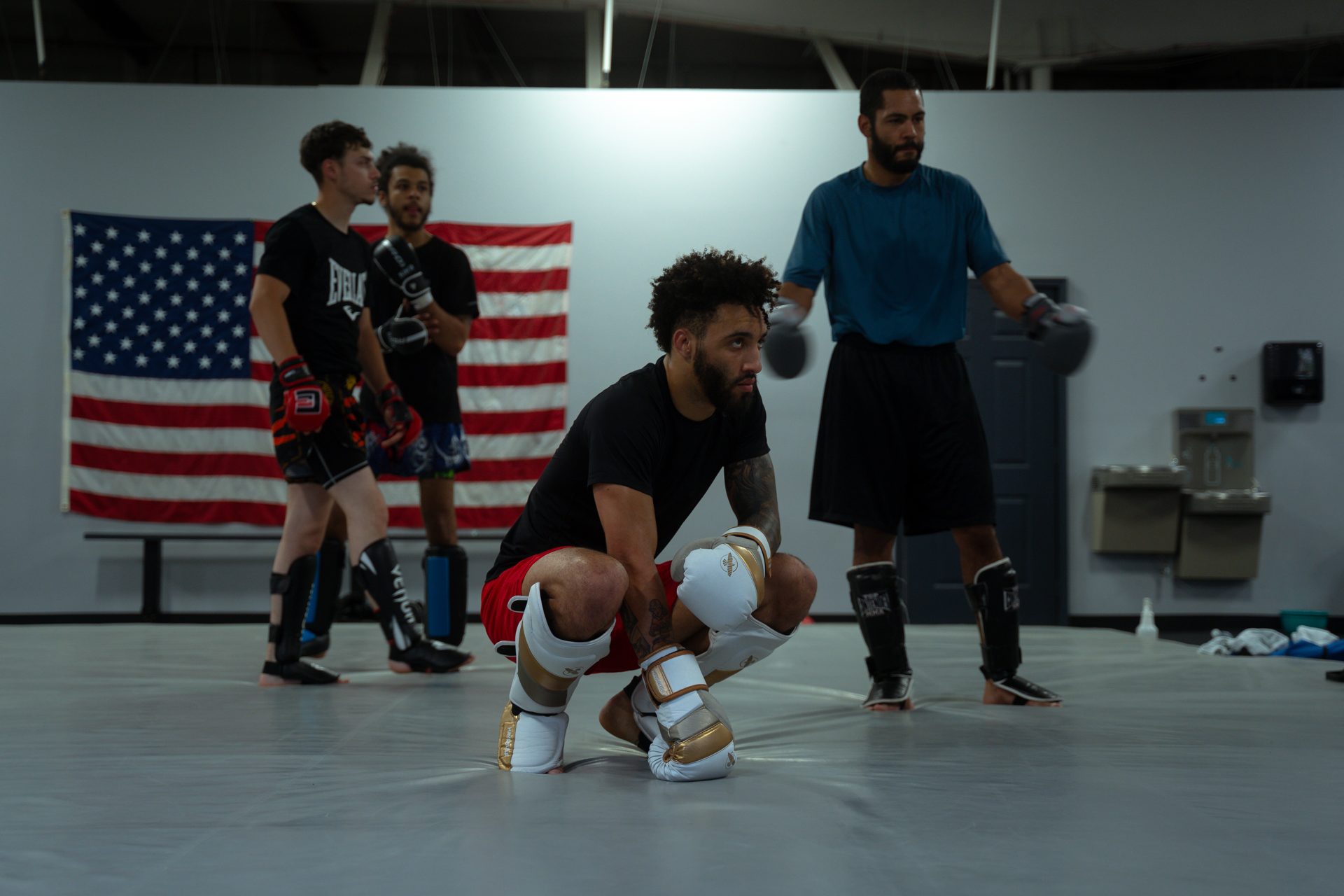
TRITAC's method is connection. Your goals connect to a custom plan. The plan connects to daily tasks, videos, flows, and clips. Every range connects to the next. And your training connects to a real coach who sees it.
Every student starts the same way: we get to know you. The quiz reads your goals, your instincts, your experience, and your body, then builds a plan that fits them. Striker or grappler. Sport, self-defense, or survival. Beginner or fifteen years in.
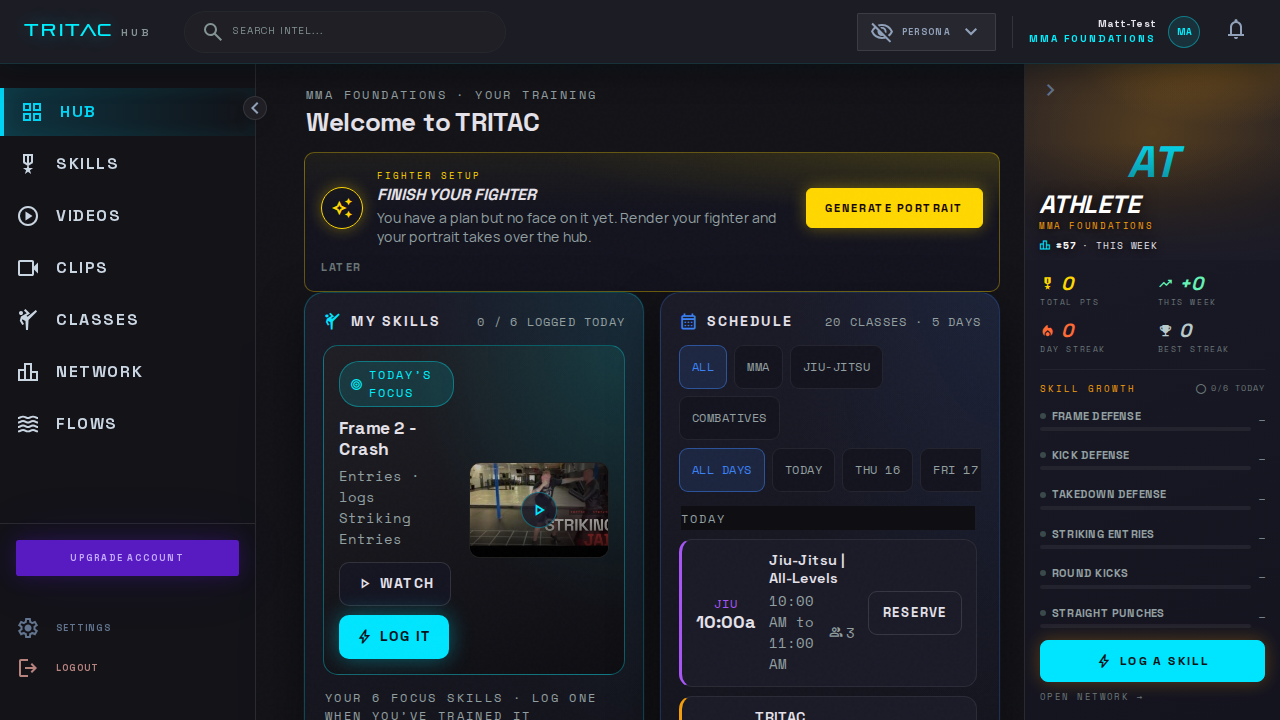
The plan turns into guided tasks: today's focus skill, its lesson, its drill. Twelve minutes counts. You are not browsing a library or guessing what to work on, because the plan already decided what today is for.
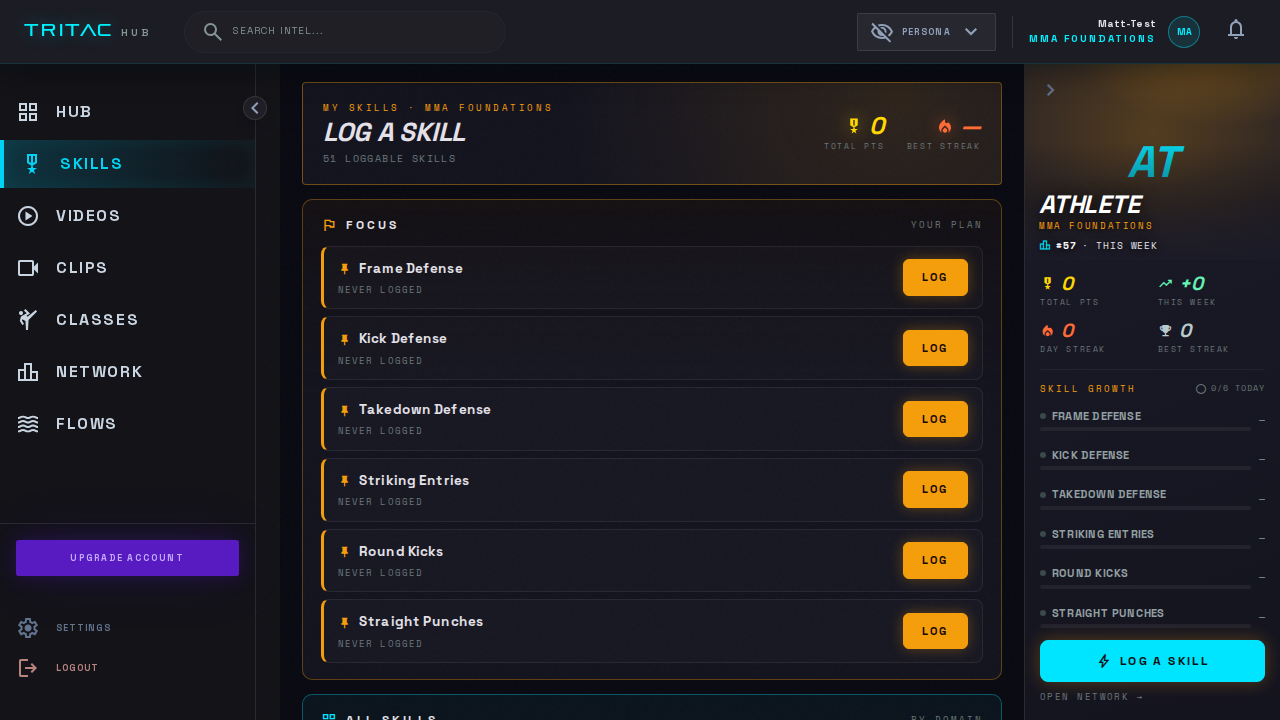
When the work is done, you log it in two taps: solo, drilled, or live. The log moves your skill map, feeds your streak, and teaches the plan what to open next. That loop, task, train, log, adapt, is the method's heartbeat.
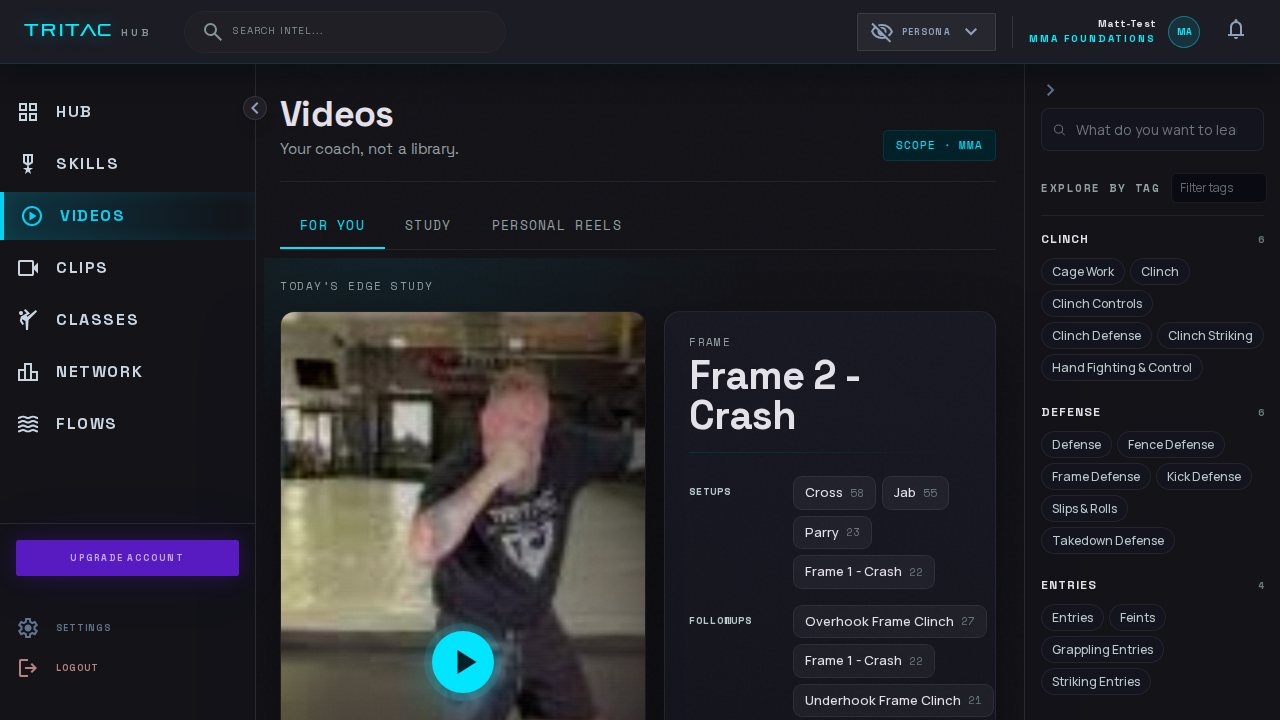
Behind every task sits the study material: 1,423 videos, each mapped to the skill it teaches. A lesson arrives with its context, what sets the technique up and what it opens next, so you study exchanges, not isolated moves.
Live classes and livestreams run from the Cromwell mat, and the community feed carries the questions and answers. Musashi, the hub's AI coach, answers study questions from the system's own material. You are studying inside a school, not a playlist.
THE VIDEO CENTER →
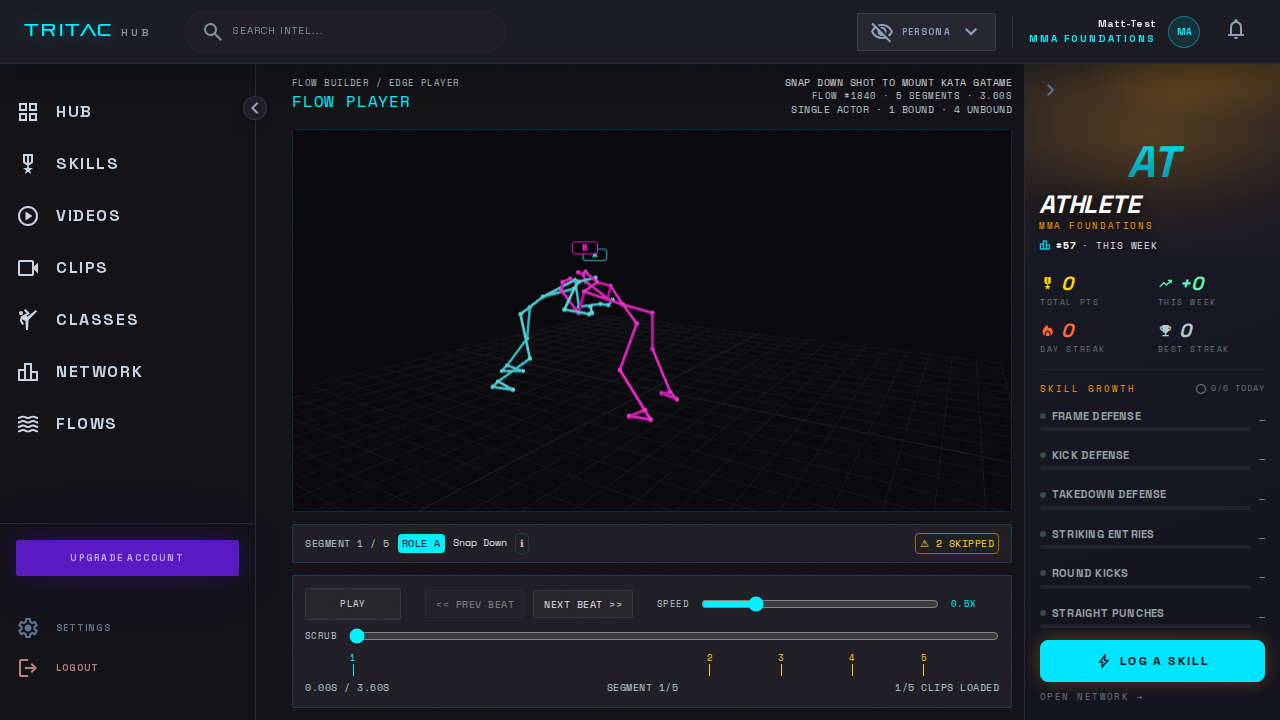
This is the Range ↔ Range layer of the method. Flows sequence striking, clinch, takedowns, and ground as one continuous map, not siloed disciplines. You train the transitions, because fights happen in transitions. The hub holds 245 flows, and the 3D player renders any one as both fighters, at any speed.
Then come the games we play, live drilling with rules and roles. Offense, defense, counter: one side attacks, one defends, and a clean defense earns the counter. Games are how drilling becomes problem-solving without becoming a brawl.
FLOWS, GAMES & THE BUILDER →
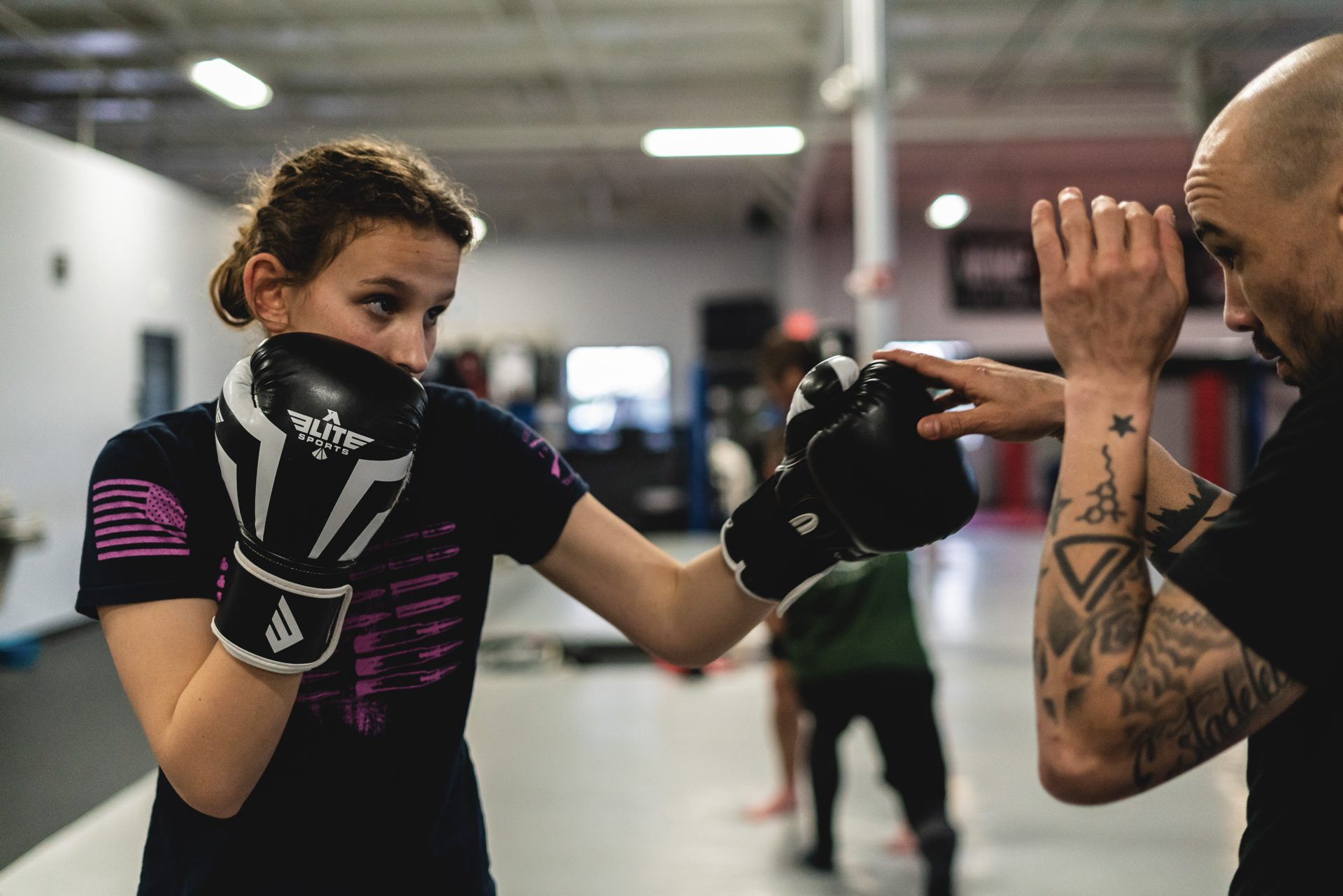
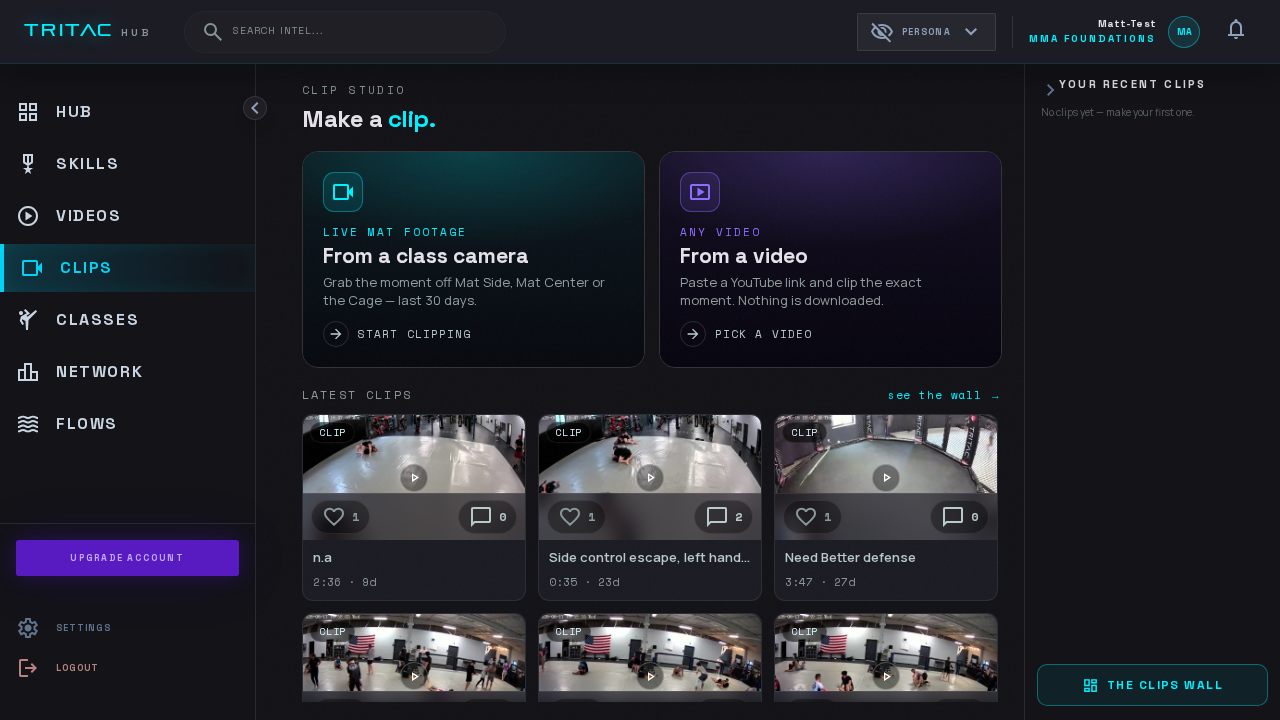
Training you cannot see is training you cannot fix. The clip studio puts your rounds on tape. Cut moments from our mat cameras or any video, keep your own reels, share to the wall for feedback.
And when you want expert eyes, you send footage through the hub. A named coach reviews it with you: live on the $49 Kickstart, quarterly as a member. The method is not content delivery. It is coaching, and coaching needs to see you.
CLIPS & FOOTAGE REVIEW →
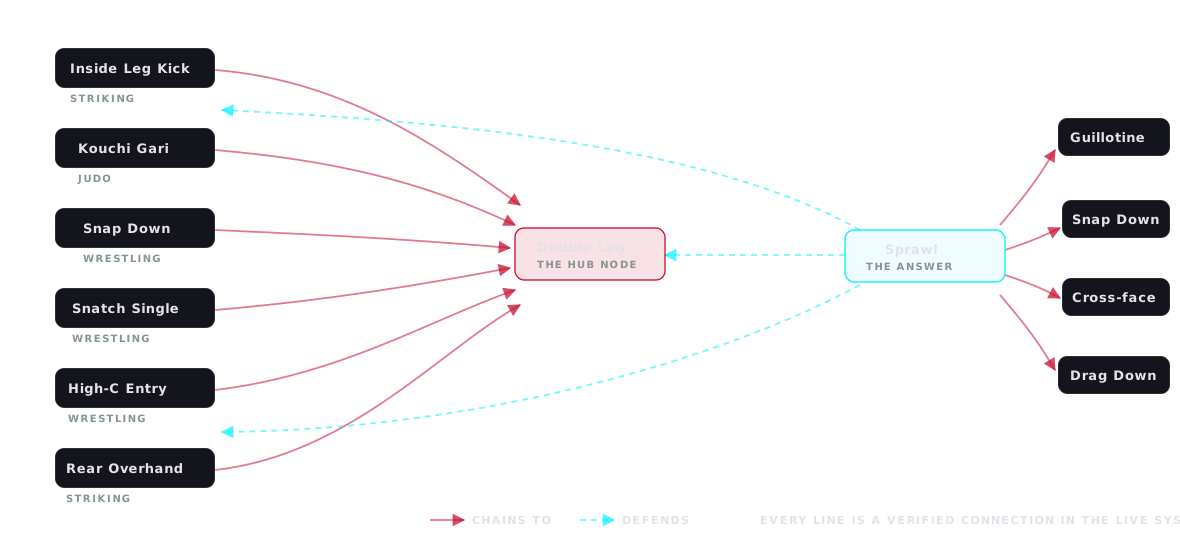
Underneath all of it sits the map: 270 techniques and 1,819 verified connections. Every technique is traced to the art it came from and stitched into one modern system. Your logged training moves your personal skill map across 60 skill areas, level by level, and the plan adapts to what the map shows.
Solo reps count. Drilled work counts more. Live rounds count most. There is no paying for rank, and the slice on the right is drawn from the live database.
THE SKILL MAP, EXPLAINED →Your focus decides how the material mixes. Switching later costs nothing you have earned.
Striking structure, clinch, takedown chains, positional ground work, submission systems. Deep no-gi coverage for MMA and grappling athletes.
The same skills flipped defense-first. The Fence, the frames, escapes from grabs and walls, striking that ends problems. No fear marketing, no fantasy.
Weapons awareness, multiple attackers, worst-case starts. The smallest path by volume, the most demanding by intent, built on the other two.
You should not have to pay, register, or answer questions to judge the teaching. These are real lessons from the map, watchable now.
Managing a threat before anything is thrown. The long-range structure every standing skill builds on.
The structure that keeps you safe closing distance, and the crash that turns it into an entry.
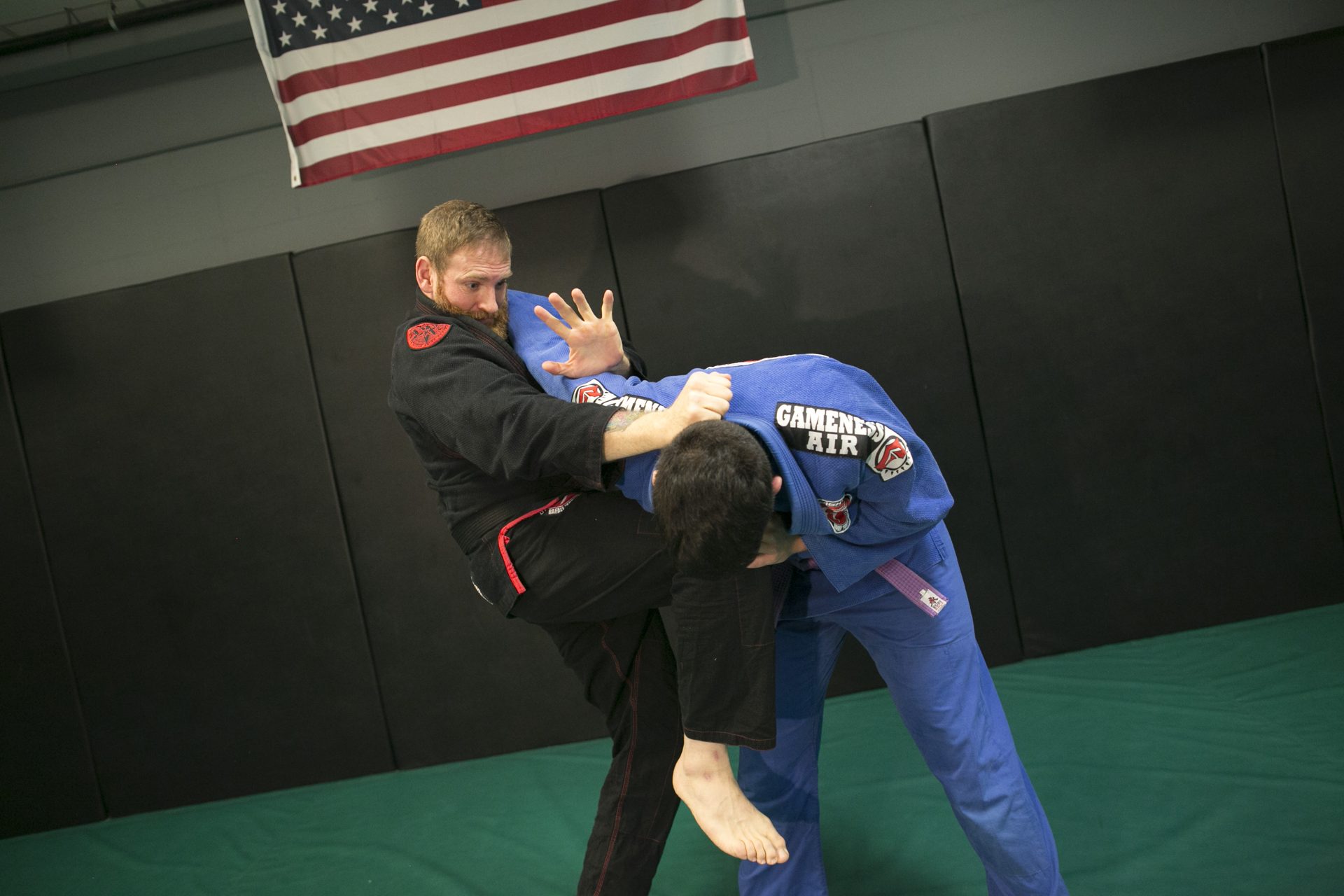
A real class from the Cromwell mat: counter boxing into clinch control and takedown entries.
The quiz takes about 2 minutes. The plan it builds is yours free for 21 days.