BUILT IN THE OPEN · THE SYSTEM GROWS EVERY WEEK · READ THE BUILD LOG
Grapplers mid-exchange on the TRITAC mat
TRITAC / FEATURES / THE SKILL MAP
THE SPINE & THE EDGES

The curriculum
is a map.

270 techniques. 1,819 verified connections between them. Your plan is a route through that map, drawn from your goals and moved by what you log.

No credit card. No contract.
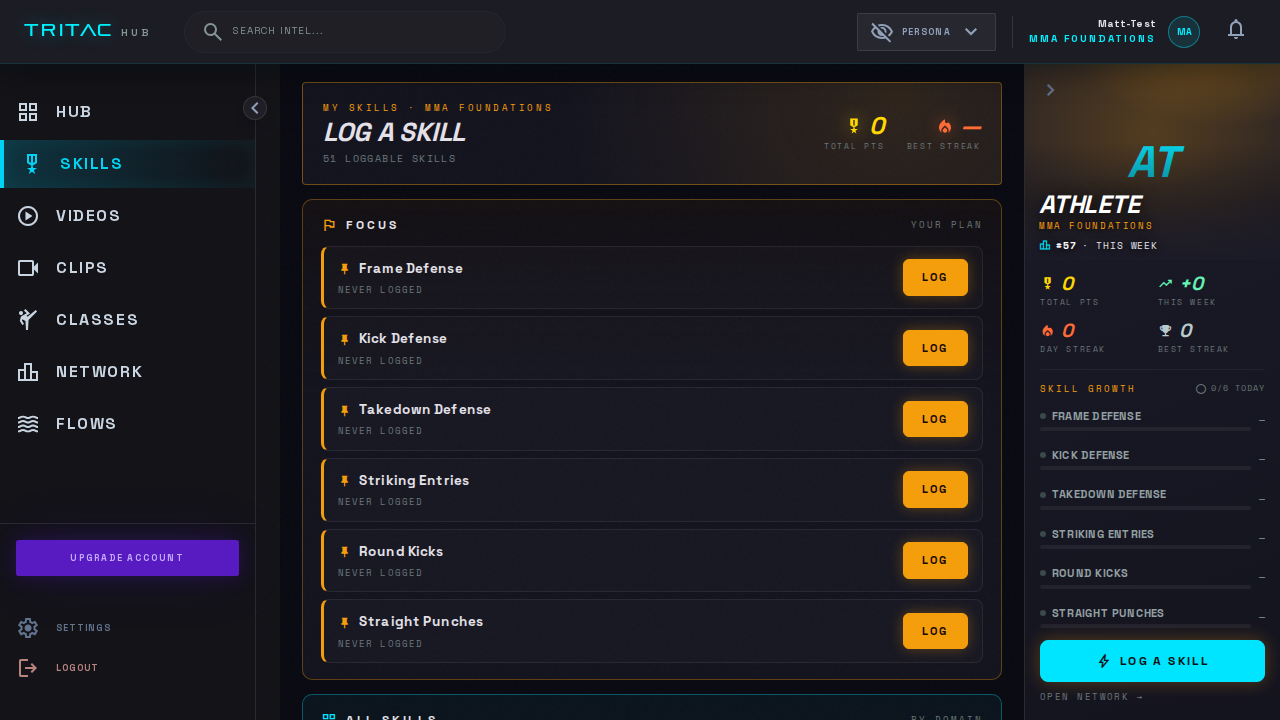
hub · your skill map
The hub skills page: a member's focus skills, log buttons, and skill growth rail
YOUR SKILL MAP · CAPTURED FROM THE LIVE HUB
THE PROBLEM WITH LISTS

A syllabus tells you what exists.

Most martial arts curriculums are lists. A list can tell you what exists. It cannot tell you what to do from where you are standing.

That gap is why online training fails people. You buy the instructional, learn the move, and it sits alone. You do not know what sets it up, what shuts it down, or what it earns you when it works. Fighting is connected. Your study should be too.

TRITAC replaced the list with a map. Every technique in the system sits on it, wired to the techniques around it. Your plan is a route through the map. The route changes as your log fills in, and the map shows you exactly why.

Two training partners working a clinch drill on the mat
CONNECTED, NOT COLLECTED · THE MAP IN PRACTICE
HOW THE MAP THINKS

Every technique has a from and a to.

TRITAC's structure has a name: the Spine. It holds every technique, position, control, and frame in the system. The connections between them are the edges: verified links that say what chains to what, what defends what, and what a defense earns.

Here is the idea that makes it work. Every technique starts somewhere and ends somewhere. An entry starts at range and ends in a grip. A takedown starts from a grip and ends in a position. The ending of one technique is the starting point of the next.

Chain those from-and-to states together and you get the map: 270 techniques, 1,819 verified connections, live in the database today. Ask it "I am here, what can I do?" and it answers with every option, what each one leads to, and what the opponent's replies open next.

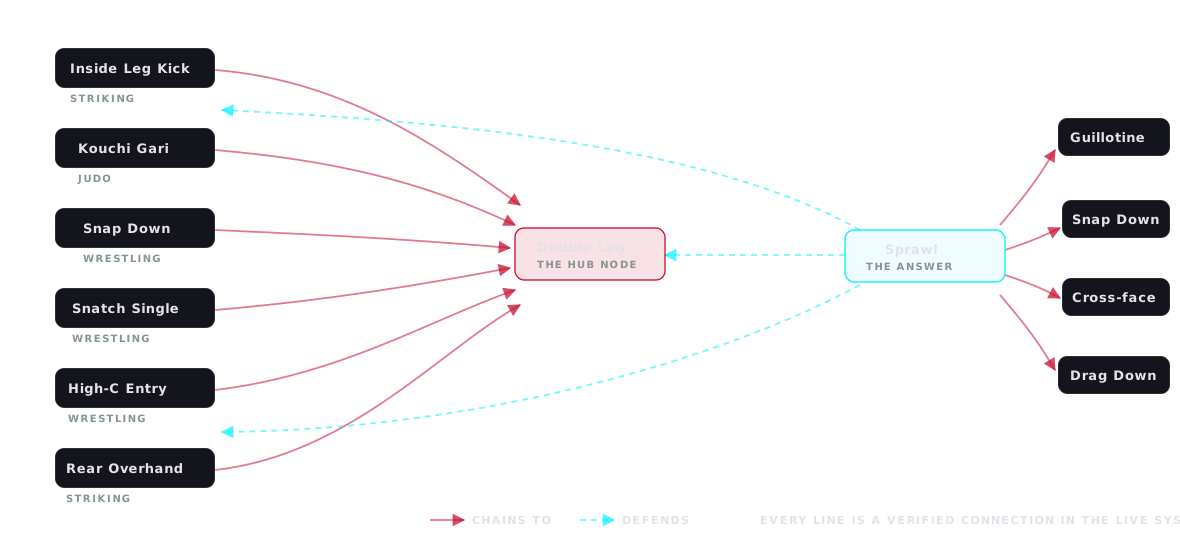
The slice on the right is real, drawn from the live system. Read it and a story appears: striking, judo, and wrestling all feed one takedown, and one good sprawl converts into four different counters.

A real slice of the technique map: striking, judo, and wrestling entries feeding the double leg, with the sprawl defending and countering
DRAWN FROM THE LIVE SYSTEM · EVERY LINE VERIFIED BY MATT BRYERS
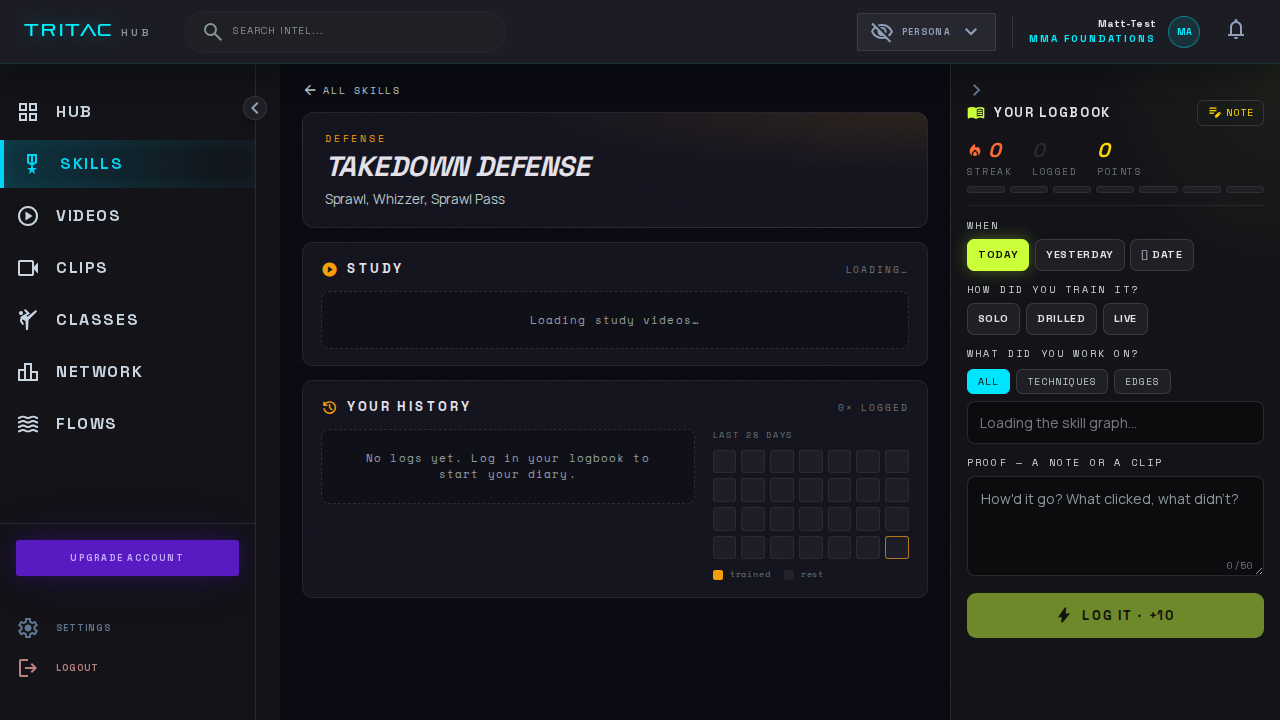
hub · takedown defense · study + log
The Takedown Defense skill page: study shelf, 28-day history grid, and the logbook rail
A REAL SKILL PAGE · TAKEDOWN DEFENSE: SPRAWL, WHIZZER, SPRAWL PASS
ONE PAGE PER SKILL

Open a skill.
Work is waiting.

Sixty skill areas cover striking, grappling, movement, and defense. Each one has a page like the one on the left, pulled from the live hub. This is Takedown Defense: the sprawl, the whizzer, the sprawl pass.

The study shelf holds the videos mapped to this skill, so learning starts one tap away. The history grid shows your last 28 days on it, trained days marked. No guessing whether you have been consistent. The grid remembers.

The logbook rail asks three questions and only three. When did you train it. How did you train it: solo, drilled, or live. What did you work on: techniques or the edges between them. Add a note or a clip as proof if you want a diary worth rereading.

That low floor is deliberate, because a record only works if keeping it costs nothing.

EARNED, NOT GIVEN

Levels move when you train.

Every skill area has a level track, and there is one way to move it: log real training. Solo reps count. Drilled partner work counts more. Live rounds count most. The system weighs how you trained, not only that you showed up.

There is no paying for rank here and no attendance trophy. The gym in Cromwell has run on that standard for 16 years, and the map holds online members to the same one.

Because skills sit on a connected map, leveling one opens its neighbors. Build your sprawl and the map surfaces what a working sprawl earns: the snap down, the front headlock, the pass. Progress in one place pays somewhere else, the way it does in a real fight.

Switching focus later costs nothing you have earned. A competitor and a parent can study the same technique for different reasons. The map holds both routes, and every logged minute stays yours.

270Techniques live on the map
1,819Verified connections
60Skill areas with level tracks
3Ways to log: solo, drilled, live
Two athletes hand-fighting for control, backlit on the mat
THE WHOLE ASK
One tap to watch.
Two taps to log.
STRAIGHT ANSWERS

Skill map questions.

Is this a belt system?
No. Online there are no belts. Each of the 60 skill areas has its own level track, moved by logged training and nothing else. The record shows what you trained, how you trained it, and what opened because of it. That tells another martial artist more than a stripe does.
Who verified the 1,819 connections?
Matt Bryers. A connection only joins the count after he has reviewed it against how the exchange works in live training. Unverified links stay out of the number. When the count on this page grows, it is because new connections passed that review, and the build log says so.
I train at another gym. Does the map fit around that?
Yes. The map does not care where a rep happened. Log the rounds and drills from your own gym and they move the same skills. Most experienced members use TRITAC as the connected structure and record their home gym does not provide.
What happens to the map if I cancel?
It waits. Your logs, levels, and history stay stored against your account. Come back in six months and the map picks up where it stopped. If you want it erased instead, one email does it.
NEXT ON THE PLATFORM
Flows & Games
SEE HOW SEQUENCES TRAIN →
SEE YOUR ROUTE

Get the map built
around you.

The quiz takes 60 seconds. The plan it builds is yours free for 21 days.

No credit card. No contract.