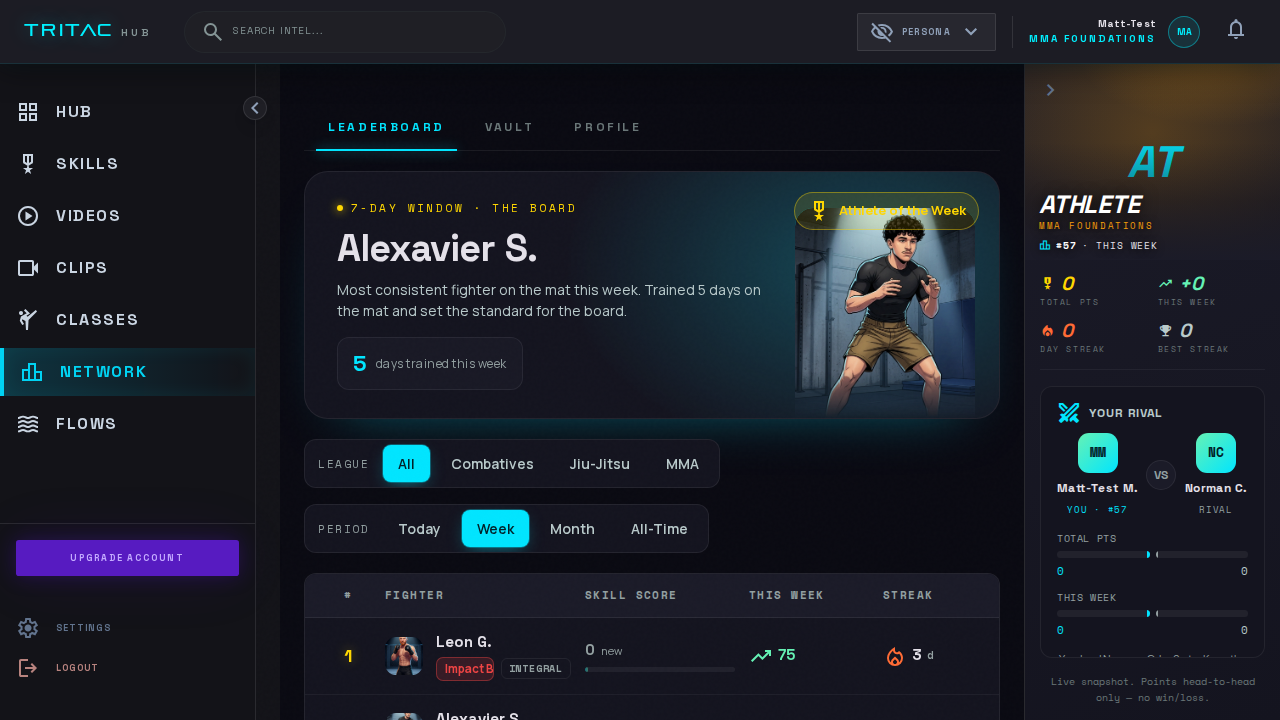
Logged training earns points. Points build streaks, leagues, rivalries, and an Athlete of the Week. The board is a record of work, and the people on it can all see who showed up.
Fitness apps learned to shower adults with badges, and adults learned to ignore them. A point you get for opening the app is worth what it cost you. When the reward is fake, the motivation it buys is fake too, and it dies in about three weeks.
TRITAC points come from one source: logged training, weighted by how you trained. Solo reps earn. Drilled partner work earns more. Live rounds earn most. There is no purchase that moves the board and no badge for showing up to scroll.
That one design decision changes what the board means. The member above you trained more than you did this week, and both of you know it.
The main board runs on a 7-day window. The race resets weekly, so a new member can beat a veteran by outworking them this week. Filters split it by league and by period: today, week, month, all-time.
Leagues follow focus. A Combatives student competes against Combatives students, a grappler against grapplers, and the All board holds the whole school. No trophy gets defended forever. The window keeps moving.
At the top sits the Athlete of the Week. In the capture above, that is a real member who trained five days and set the standard for the board. Members render a fighter portrait in the hub, and the week's winner gets the spotlight card with theirs.
Points also bank in the Vault, the network's reward shelf. The training earns twice: once on your map, once on the board.
The rival panel is the network's sharpest tool. Pick a rival and the hub tracks you head-to-head. Total points and this week's race sit side by side, updating as you both log.
It is points only, by design. No win-loss records, no submission tallies, no fight talk. The screen says it plainly: a live snapshot of work, head-to-head. You are racing someone's consistency, and consistency is a race worth losing some weeks.
Training with a friend from your own gym? Both of you log, both of you board, and Tuesday's rounds get more interesting. The photo on the left is what rivalry looks like at this school.
The streak counts training days against the cadence you set, not against a demand for daily perfection. It survives the business trip that would kill a calorie-app streak, because it was designed by people with jobs who train.
Miss a week and the plan does not shame you. It shortens the next session, brings back your last focus skill, and rebuilds momentum from where you stand. The streak exists to protect consistency. Consistency is the entire secret of skill.
The quiz takes about 2 minutes. The plan it builds is yours free for 21 days.