1,423 videos, every one mapped to a skill on your map. Plus a studio for cutting tape: moments from our mat cameras, or any video worth studying.
Serious martial artists buy instructionals. Then the instructionals sit there. Four hours of unwatched chapters is not a study system. It is homework with no teacher, and browsing a library is how motivated people stall for a year.
The hub's video center opens with a line that sets its rules: your coach, not a library. The plan decides which lesson today is for and puts it in front of you. Every skill page keeps its own study shelf.
The library is big because the map is big. 1,423 videos, each one tagged to the skills and connections it teaches. Size is not the point. Placement is.
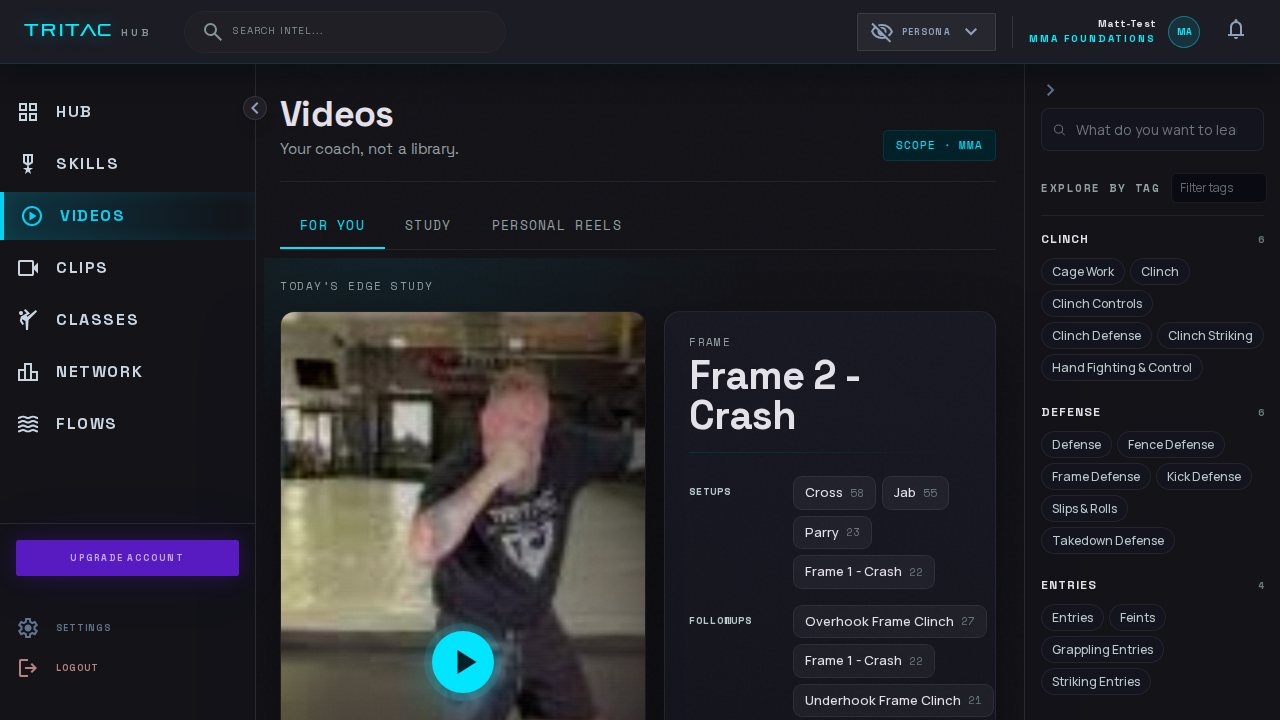
Look at the capture above. Today's study is Frame 2 - Crash, a TRITAC structure for closing distance. The video does not arrive alone. Beside it sit its setups, the cross, the jab, the parry, and its followups, the overhook and underhook clinch entries. Each chip carries its own film.
That is the skill map working inside the video center. You are not watching a move. You are studying a neighborhood: what invites the technique, what it opens when it lands. Study a lesson this way once and you understand why isolated tutorials kept failing you.
A tag explorer sits on the side for the days you want to hunt: clinch, defense, entries, every area in your focus. And the For You tab resets each day, so the decision of what to watch is already made when you arrive.
Watching lessons is half of video training. The other half is watching yourself, and almost no one does it, because cutting tape has meant cameras, cables, and editing software.
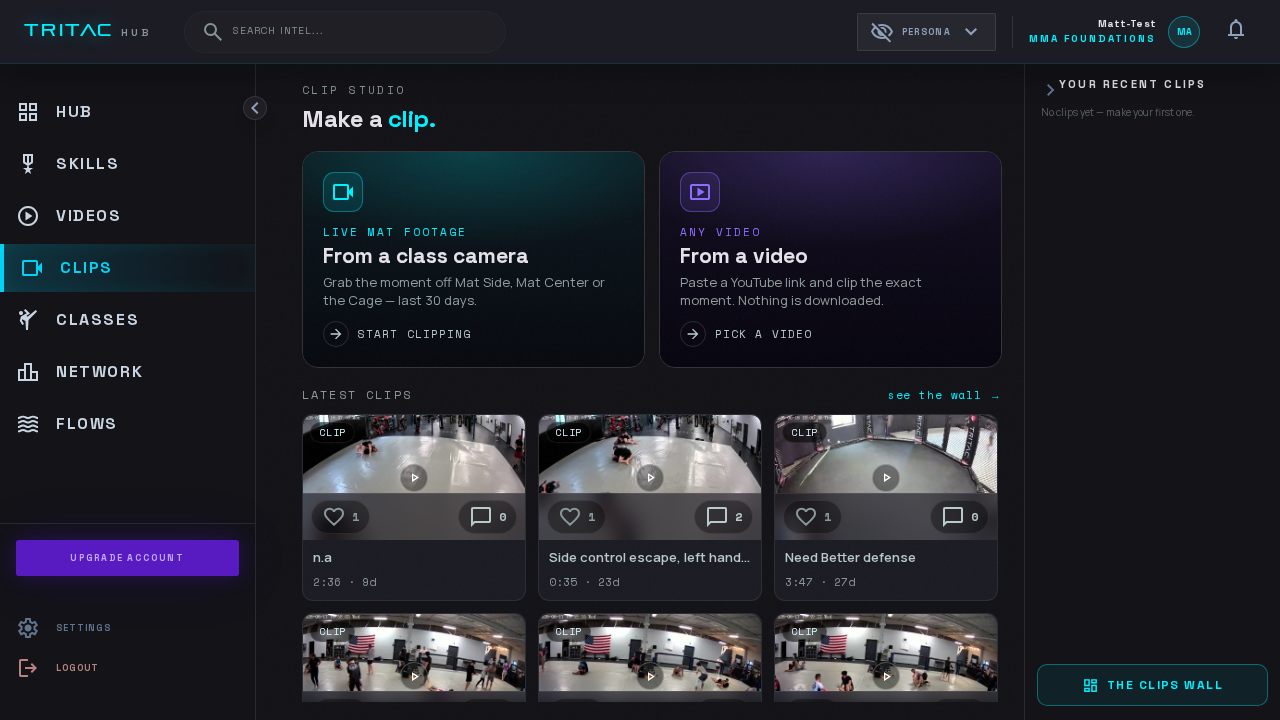
The studio gives you two doors. Door one: the class cameras. Mat Side, Mat Center, and the Cage record in Cromwell, and members can grab any moment from the last 30 days. Rolled well Tuesday night? Cut the clip from the mat's own footage.
Door two: any video. Paste a YouTube link and clip the exact moment you want to keep. Nothing gets downloaded. Competition study, a technique detail, a round worth rewatching: cut it and it joins your reels.
Clips land on the members' wall, where training partners like and comment. The capture shows it live: real clips, real names, a member asking for feedback on a side control escape.
Video in the hub is wired to the record. You watch the day's lesson, you drill it, and the log sits one tap away, on the same skill page as the film. The lesson you watched, the reps you did, and the level that moved are one entry in your history.
That wiring is the difference between video training and video watching. A library measures watch time. The hub measures what you trained because of it, and your plan reads that record to pick tomorrow's lesson.
And when a question comes up mid-study, you ask Musashi, the hub's AI coach. It answers from the system's own material, the map, the lessons, and the method, so the answer matches what your plan is teaching.
The quiz takes about 2 minutes. The plan it builds is yours free for 21 days.